A real estate investment proposal without clear financial logic and market validation doesn't get a second read.
Capital allocators evaluate multiple deals simultaneously. Each one is backed by competing sponsors making similar claims about returns and market timing.
According to CBRE's 2026 North American Investor Intentions Survey, 74% of investors plan to buy more commercial real estate assets than they did the previous year. More proposals land on more desks, and the bar for earning a commitment keeps rising.
Capital follows the investment thesis that holds up under scrutiny: sourced assumptions, named and quantified risks, relevant comparables, and clear financial projections that tie directly to the narrative on page one.
This guide covers how to structure a real estate investment proposal — and includes a real estate proposal template — that gives institutional investors and acquisition committees the clarity to move from evaluation to commitment.
What is a real estate proposal?
A real estate investment proposal is a formal document that presents a property acquisition or development opportunity to potential investors or capital partners.
Deal teams use it to outline the investment thesis, financial projections, market analysis, risk factors, and potential return for a specific asset. On the other hand, real estate agents, brokers, acquisition teams, and development firms use these professional documents to engage potential clients, prospective clients, and potential partners across institutional and private capital markets.
Private equity firms, institutional investors, and family offices use real estate proposals to evaluate whether an opportunity meets their return thresholds and portfolio strategy. The document typically accompanies a formal funding proposal or goes directly to an investment committee as part of an internal approval process.

What to include in a real estate investment proposal
A real estate investment proposal typically includes ten sections: executive summary, property description and site analysis, market analysis, investment thesis and strategy, financial projections, capital structure and funding requirements, risk assessment and mitigation plan, sponsor and team credentials, exit strategy and disposition timeline, and supporting documents and appendices.
Structuring the proposal around these ten sections ensures every reviewer finds the information relevant to their role without requesting follow-up materials.
Executive summary
An investment committee reviewing a 30-page proposal with a dense pro forma and a 15-year hold period needs a reason to keep reading past page one. The executive summary provides that reason.
Think of it as the deal in miniature. A partner scanning five real estate proposals before a Monday IC meeting should be able to read the executive summary alone and know whether the opportunity fits the fund's mandate, risk tolerance, and return threshold — making it one of the most important details in the entire document.
A common mistake: writing the executive summary first and updating it later. The numbers shift as the pro forma evolves. Write it last, and audit every figure against the final financial projections and model before submission. A well-structured proposal starts with an executive summary that gives potential investors an immediate reason to keep reading.
Property description and site analysis
Before an investor interrogates the pro forma, they want to understand what the capital is buying at a physical and operational level. The property description answers that question.
Include all the important details potential investors need to assess the asset without a site visit:
- Asset type, square footage, unit count, and year built
- Current occupancy rate and tenant mix
- Lease terms, weighted average lease expiry, and rent roll summary
- Physical condition, recent capital improvements, and deferred maintenance — including any property assessments completed
- Zoning classification and entitlement status
- Unique features and site-specific factors like access points, visibility, and proximity to demand drivers that help the property stand out against similar properties
Market analysis
A strong pro forma built on weak market data falls apart under committee scrutiny. This section provides the external validation — demographic, economic, and competitive — that either supports or undermines every projection in the financial model.
MSA-level data tells investors what they already know. Submarket-level data tells them something useful. A strong market analysis covers relevant details that support every projection in the financial model:
- Population growth, employment trends, and median household income for the MSA and submarket
- Vacancy rates, absorption trends, and market trends for the specific asset class
- Comparable lease rates and recent rent growth trajectories
- New supply pipeline — permits filed, projects under construction, expected delivery dates
- Demand drivers like employer expansions, infrastructure investment, or institutional anchors
- Cap rate trends from comparable recent transactions and similar properties
Source everything. CoStar, CBRE, Marcus & Millichap, and local economic development agencies publish submarket research reports that carry weight with institutional reviewers. "Strong rental demand" without a citation reads as opinion.
Investment thesis and strategy
Deal teams present market data and financial projections in every proposal. The investment thesis ties those inputs to a strategic rationale — a concise argument for why this asset, at this price, in this market, will generate the projected returns within a defined timeframe.
A strong investment thesis answers four questions:
| Question | What it answers |
|---|---|
| Why this asset? | What makes the property compelling relative to comparable opportunities |
| Why this market? | What submarket dynamics create favorable conditions for the strategy |
| Why this price? | How the basis compares to replacement cost, recent comps, and projected stabilized value |
| Why now? | What timing factors, like interest rate conditions, seller motivation, or supply gaps, create an entry point |
The strategy section translates the thesis into an implementation plan that outlines strategies for value creation in concrete terms. For a value-add multifamily acquisition, for example, that might include a unit renovation program with per-unit budgets, an operational expense reduction target, and a lease-up timeline tied to specific rent premiums.
One test: can an analyst rebuild the pro forma assumptions from the thesis and strategy section alone? If the answer is yes, the two sections are doing their job together.
Financial projections
The pro forma is a forward-looking financial model that projects revenue, expenses, debt service, and investor returns over the anticipated hold period. If the investment thesis tells the story, the pro forma puts numbers behind every sentence.
A complete pro forma covers clear financial projections, including:
- Gross potential income based on market rent comps and occupancy assumptions
- Vacancy and credit loss estimates grounded in submarket data
- Operating expense breakdown, including property management, insurance, taxes, and maintenance
- Net operating income by year across the projected hold period
- Debt service schedule including loan terms, interest rate, and amortization
- Capital expenditure budget tied to the value creation strategy
- Return metrics such as IRR, equity multiple, cash-on-cash yield, and potential return for investors
Capital structure and funding requirements
The capital structure section explains how the deal is funded — the split between equity and debt, the sources of each, and the terms attached to both. Investors reading this section are evaluating two things: the risk profile of the capital stack and where their money sits within it.
Cover the following relevant details:
- Total cost, including acquisition, closing costs, capital improvements, and reserves, as well as the purchase price and how it compares to the investment thesis
- Debt structure, such as loan amount, LTV ratio, interest rate, term, and amortization schedule
- Financing options, such as equity requirement and the proposed split between sponsor and investor capital
- The sponsor's co-investment, expressed as a percentage and a dollar figure
- Preferred return, promote structure, and waterfall distribution terms
- Any mezzanine debt, bridge financing, or potential partners contributing JV capital
One area that generates unnecessary back-and-forth: vague reserve assumptions. Specify the operating reserve, the CapEx contingency, and what triggers a capital call if either is depleted. Investors who have been through a cycle where reserves ran dry will look for this detail, and its absence raises more questions than the numbers themselves would.
Risk assessment and mitigation plan
Every deal carries risk. Investors know that. What concerns them is a proposal that either ignores risk entirely or buries it in boilerplate language that could apply to any asset in any market.
A credible risk assessment names the specific risks facing this real estate project and pairs each one with a concrete mitigation strategy — giving potential investors a professional presentation of how the deal team thinks about downside scenarios. Common categories include:
| Risk category | Description |
|---|---|
| Market risk | Demand softening, rent compression, or rising vacancy in the submarket |
| Construction and development risk | Cost overruns, permitting delays, or labor shortages |
| Interest rate risk | Refinancing exposure if market trends shift rates during the hold period |
| Tenant concentration risk | Revenue dependency on a small number of tenants or leases |
| Regulatory risk | Zoning changes, rent control legislation, or environmental compliance |
| Exit risk | Cap rate expansion or reduced buyer demand at the planned disposition date |
For each risk, explain the mitigation. If the deal carries significant interest rate exposure, describe whether the debt is fixed-rate, hedged with an interest rate cap, or structured with extension options. If tenant concentration is high, outline the lease renewal probability and the re-leasing timeline if the anchor vacates.
Sponsor and team credentials
Institutional investors back teams as much as they back deals. The team section is where investors assess whether the people behind the deal can deliver on the plan.
This section should cover:
- The sponsor's track record — number of deals, total capitalization managed, and asset types
- Realized returns on comparable prior investments, including hold periods and exit outcomes
- Key team members, their roles on this deal, and relevant experience
- Property management capabilities — whether in-house or third-party, and the manager's track record with the asset class
- Any institutional co-investors or potential partners involved, and what their participation signals about deal quality
Direct quotes from capital partners or co-investors on previous projects add a layer of third-party validation that helps build trust — quotes that speak to the sponsor's execution quality are more engaging and persuasive than a credentials page alone.
Exit strategy and disposition timeline
The exit strategy tells investors how and when they get their capital back — and at what return. Every assumption in the pro forma ultimately flows toward this moment, so the exit section needs to be as rigorously sourced as the market analysis and the financial model.
Cover the following:
- The planned exit method — sale, refinance, recapitalization, or portfolio inclusion
- The projected hold period and target disposition date
- The assumed exit cap rate and the comparable transactions supporting it
- The projected sale price and net proceeds after debt payoff and closing costs
- Investor-level returns at exit — IRR, equity multiple, and total distributions
Address contingencies that meet client expectations for downside planning. What happens if market trends shift and the planned exit timeline no longer makes sense? Outline the fallback — whether that's extending the hold period, refinancing to return capital, or pivoting to a longer-term income strategy.
Supporting documents and appendices
Every sourced statistic, market assumption, and financial projection referenced in the body of the proposal should have backup material accessible here without forcing the investor to request it separately.
Common appendix items include:
- Full rent roll with unit-level detail
- Property condition assessment or engineering report
- Phase I environmental site assessment
- Appraisal or broker opinion of value
- Title report and survey
- Zoning and entitlement documentation
- Detailed construction budget and GC bid for development deals
- Insurance quotes and tax assessment records
- Letters of intent from prospective tenants, if applicable
- Market research reports from CoStar, CBRE, or comparable sources
One practical consideration: organize the appendix with a clear table of contents and label each document so it corresponds to the section of the real estate proposal it supports. Including all relevant details here — from property assessments to market research — means potential investors can conduct due diligence without requesting documents separately.
Tips to make your real estate investment proposal stand out
A well-structured real estate investment proposal addresses the fundamentals. The tips below focus on what moves it from complete to competitive — presentation quality, interactivity, engagement tracking, and signing workflow that reduces friction between review and commitment.
Use high-quality images and video walkthroughs
A spreadsheet can model the returns. It can't show an investor the condition of the roof, the quality of the finishes, or the proximity to a new transit station two blocks east.
High-quality images and video give potential clients a due diligence layer they can access without scheduling a site visit. Include:
- Professional exterior and interior photography that showcases the property's unique features
- Drone footage or aerial imagery showing the site in context — surrounding development, access roads, demand drivers
- Video walkthroughs of common areas, unit interiors, and renovation comps if the strategy involves value-add development
- Neighborhood and submarket photos that reinforce the market analysis — nearby employers, retail corridors, infrastructure projects
For development deals, add rendered site plans, architectural elevations, and phasing diagrams that show what the finished project looks like relative to the current state of the parcel.
Static PDFs compress high-quality images and bury video links in footnotes. Qwilr proposals embed high-resolution photography, drone footage, and video walkthroughs directly into the real estate proposal — playable inline, without requiring the investor to open a separate tab or download a file.

The visual narrative sits alongside the financial projections instead of competing with them for attention.
Every visual should reinforce a claim made elsewhere in the real estate proposal. Visuals without context are decoration. Visuals tied to the investment thesis and unique selling points of the asset are evidence that helps potential investors feel confident in the opportunity.

Make pricing and capital structure interactive
An investor reviewing a static PDF with a fixed equity split, a single debt scenario, and one return projection has no way to test alternatives without requesting a revised model or building their own. Interactive pricing removes that friction.
Instead of presenting a single capital structure as final, let potential investors adjust variables and explore financing options to see how the potential return shifts in real time:
- Toggle between different equity/debt ratios and see the impact on cash-on-cash yield
- Model a higher or lower preferred return and watch the waterfall redistribution
- Adjust the hold period from five years to seven and compare the exit-level IRR
- Add or remove a mezzanine tranche and see how the capital stack changes
Qwilr's interactive quote blocks let deal teams build this flexibility directly into the real estate proposal.
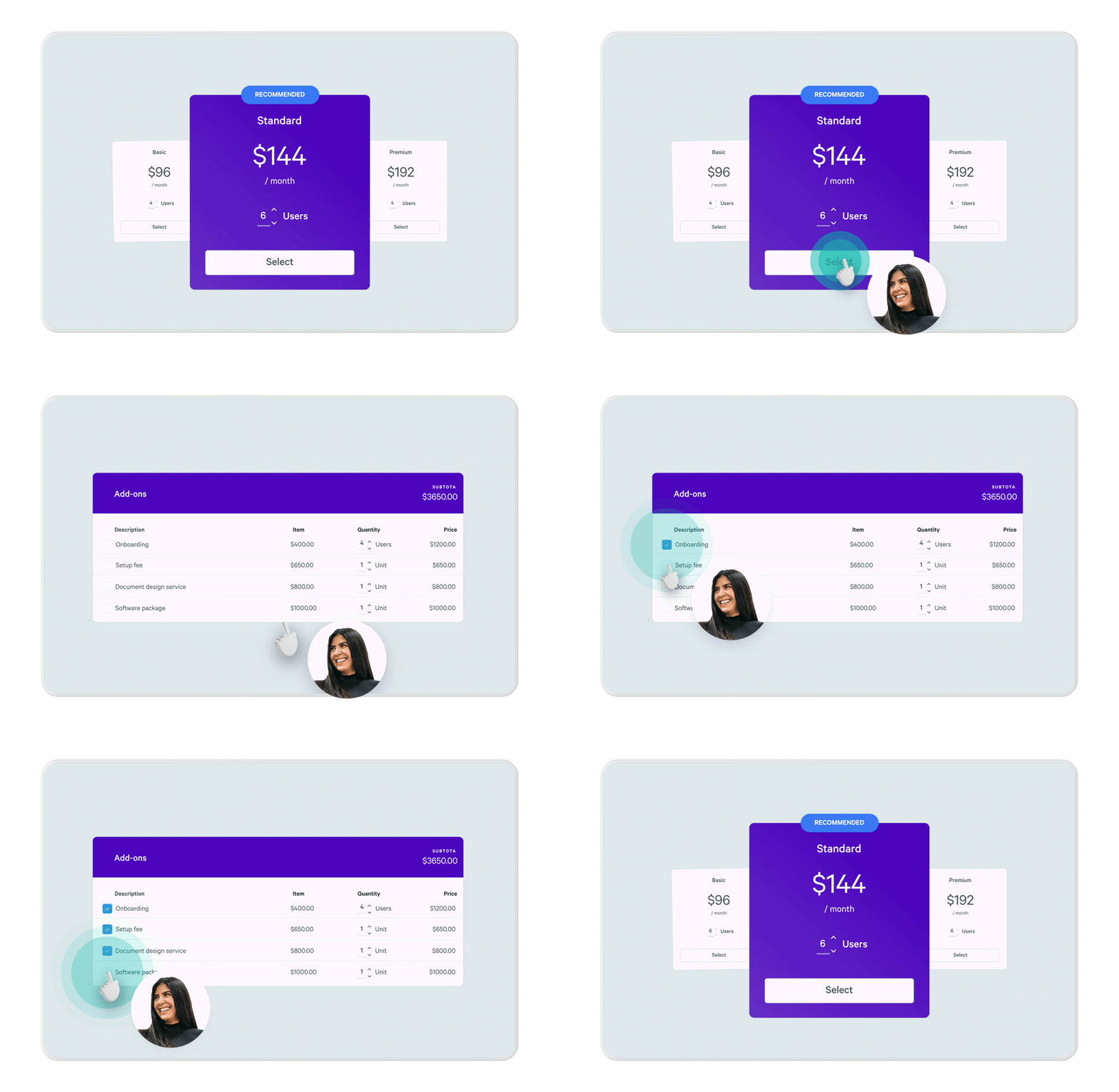
Investors can configure scenarios without leaving the document or waiting for a revised version, and the deal team can see which configurations the investor explored, providing a signal of where their priorities and concerns sit.
This pricing strategy also reduces a common source of delay: the investor who wants to see "one more scenario" before committing. When they can model that scenario themselves, the request never becomes an email thread — and the proposal creation process moves faster for everyone involved.
Track which sections investors spend time on
Sending a proposal and waiting for a response is a passive strategy. The timing and content of a follow-up conversation change when it's informed by how the investor has actually engaged with the document.
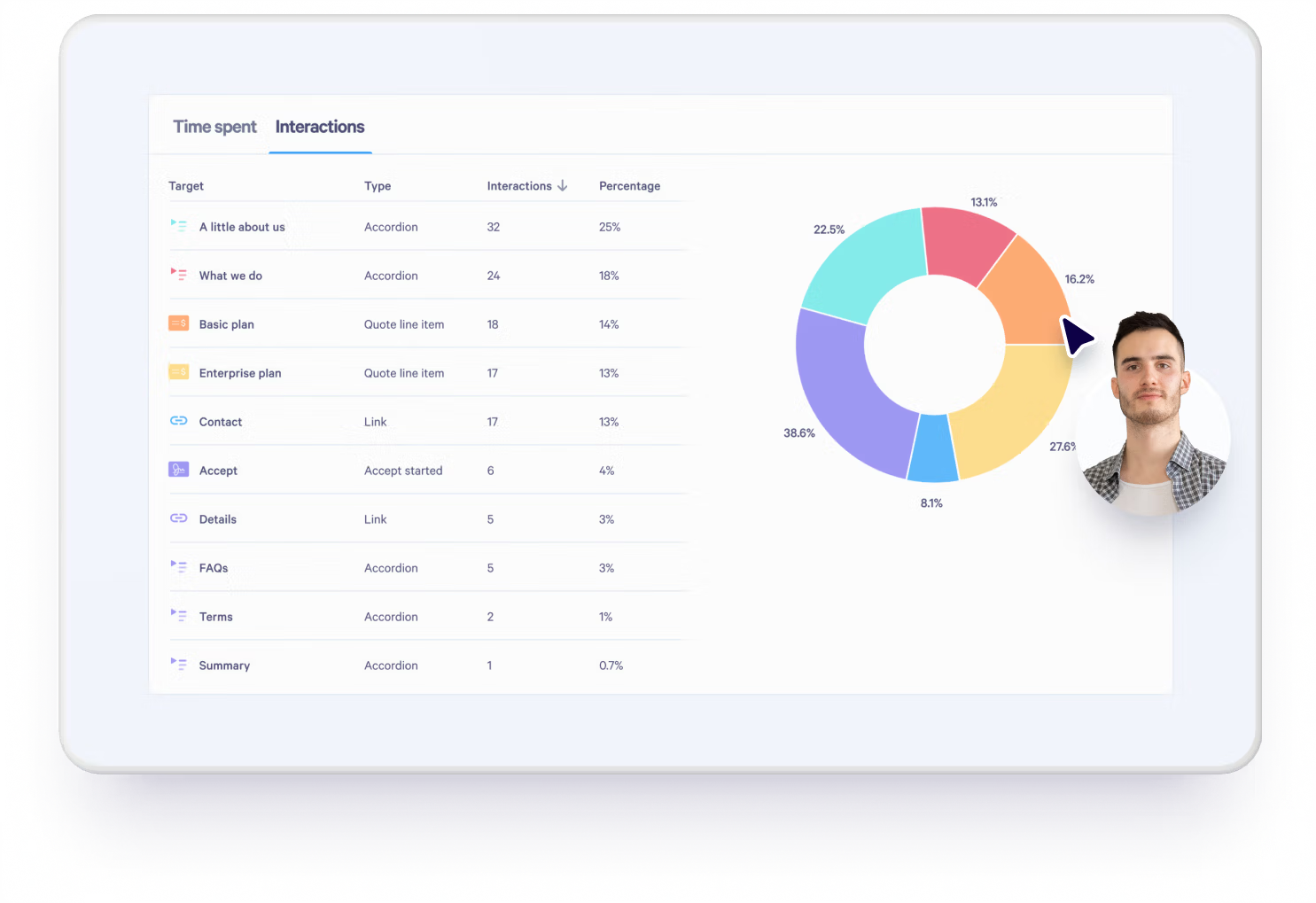
Qwilr's built-in sales content analytics surface engagement data in real time, giving deal teams visibility into which sections received the most attention and whether pricing was viewed multiple times.
Which sections were skipped or barely reviewed is equally useful data.
Committee dynamics also become visible. If the proposal was forwarded to three additional stakeholders within a week of sending, the deal is advancing internally. If only one person opened it and no one viewed the pro forma, the deal may need re-engagement at a different level.
Matt Anson, SEO Manager at Stafflink — one of Australia's fastest-growing real estate support agencies — describes how engagement alerts helped his team reconnect with a prospect:
"We sent a proposal to a prospect who wanted a website redesign, they decided to explore other options before working with STAFFLINK. Six months later, I got an alert from Qwilr that the prospect had reopened the original proposal. I reached back out, and eventually they signed up for more than we had originally pitched them."
The same dynamic applies to real estate proposals. A capital allocator who revisits a deal memo months after the initial review is signaling renewed interest — and engagement alerts ensure the deal team catches that window rather than missing it.
Embed e-signature and term acceptance into the proposal
A proposal that requires a separate real estate contract document, a PDF attachment for terms, and a third-party e-signature tool introduces three handoff points where momentum can stall.
Each handoff adds time, creates version control risk, and gives the investor's legal team another reason to pause.
Consolidating terms and signature into the real estate proposal itself collapses that gap and creates a professional finish that meets client expectations at every step. Include:
- Key commercial terms — preferred return, promote structure, minimum investment, and hold period
- Legal provisions — indemnification, dispute resolution, and governing law
- Subscription or commitment acknowledgment language reviewed by counsel
- E-signature fields for each signatory on the investment committee
Qwilr embeds legally binding terms and conditions and e-signature directly into the proposal document. The investor reviews the deal, accepts the terms, and signs.

No downloading a separate PDF. No switching to Docusign. No waiting for legal to locate the latest redline.
For deals with multiple signatories, Qwilr's group sign functionality routes the document to each stakeholder in sequence or in parallel.
The deal team gets visibility into who’s signed and who hasn't, without chasing status updates over email.
Real estate proposal template
Building a real estate investment proposal from scratch adds hours of formatting work to every deal. For businesses managing multiple active raises, that time compounds quickly. Qwilr's real estate proposal template provides a pre-built structure that deal teams can populate with deal-specific data and send to potential investors in a fraction of the time a blank document takes.
This template is built for real estate agents, brokers, property developers, and acquisition teams who need to present investment opportunities with a professional presentation, clear financial projections, and a professional finish — without rebuilding the document for every deal or every set of potential clients.
Qwilr's real estate proposal template includes:
- Executive summary and investment thesis sections
- Property description and property details with floor plan layouts
- Investment summary with capital growth calculator showing potential return scenarios
- Interactive pricing and capital structure blocks with financing options
- Location mapping with embedded Google Maps
- Space for similar properties, comparable transactions, and investor information requests
- Next steps and e-signature fields so potential partners can commit without leaving the document
Trent Michels from Commercial Carolina describes the impact on his firm's proposal creation process and ability to engage potential clients:
"Qwilr is an amazing platform for our firm because it allows us to engage our wide range of clients with a digital pitch deck or memorandum that is visually appealing and easy to follow. Providing us the ability to embed Google Maps, Excel sheets, and other important details allows us to address all our clients' concerns in a flawless flow. The utilization of Qwilr provides you the ability to show people what is possible and encourages confidence in the presenter that they will deliver."
Build better real estate proposals with Qwilr
The framework in this guide covers every section an investment committee expects to see. Each section gives investors the clarity they need to move forward with confidence.
Qwilr's real estate investment proposal template puts that framework into a ready-to-use format with interactive pricing, embedded video, e-signature, and real-time engagement tracking. Populate it with your deal data and send a polished, professional proposal without starting from a blank page.
Sign up for a free trial to see it in action.

Build better real estate proposals with Qwilr
You're now armed with the knowledge to create real estate proposals that truly stand out. With the strategies we've shared, you're well-equipped to create proposals that not only convey information but also tell a compelling story about each property's potential. But why reinvent the wheel with each new opportunity? With Qwilr’s real estate investment proposal template, you can streamline your process and ensure you're hitting all the right notes every time! Sign up for a free trial to see it in action.
About the author

Kiran Shahid|Content Marketing Strategist
Kiran is a content marketing strategist with over nine years of experience creating research-driven content for B2B SaaS companies like HubSpot, Sprout Social, and Zapier. Her expertise in SEO, in-depth research, and data analysis allow her to create thought leadership for topics like AI, sales, productivity, content marketing, and ecommerce. When not writing, you can find her trying new foods and booking her next travel adventure."