A recruitment proposal is the moment a firm's understanding of a client's hiring challenge either lands or falls flat.
Most agencies can source candidates. Fewer can show a client that they've absorbed the pressure behind the hire, the culture it has to fit, and the cost of getting it wrong.
Only 46% of hiring processes are considered successful, meaning more than half of searches fail to result in a hire. Clients signing off on a recruitment partner already know the odds. An agency that addresses that failure rate head-on, with a process built around reducing it, starts the conversation with credibility already established.
This guide covers how to write a recruitment proposal that earns trust quickly, demonstrates genuine market knowledge, and makes the case for a long-term partnership over a transactional engagement.
What is a recruitment proposal?
A recruitment proposal is a formal document a staffing firm or independent recruiter submits to a prospective client. It outlines how they plan to find, assess, and deliver qualified candidates for a specific role or hiring initiative.
The document covers:
- The agency's understanding of the client's hiring needs, company information, and company culture
- The sourcing and screening methodology, including background checks and candidate sourcing approaches
- The timeline for delivering candidates, including the expected joining date for placements
- The fee structure for recruitment services — whether a percentage of gross annual salary, a fixed hourly cost, or a retainer arrangement covering ongoing recruitment services
For example, a firm pitching to fill a senior product management role at a Series B SaaS company might map its sourcing strategy to the company's growth stage. They'd outline the candidate profile most likely to succeed in that environment, a 30-day delivery timeline, and a contingency fee tied to base salary.
When multiple agencies are pitching for the same mandate, the proposal becomes the filter. Clients use it to identify which firm absorbed the briefing, which one understands the industry well enough to anticipate obstacles, and which one is bringing a credible process to the table.
What to include in a recruitment proposal
A recruitment proposal covers eight core sections. Each one addresses a question the client will have about the agency's understanding of the role, the search process, the timeline, and the cost. The sections below break down what belongs in each one and how to approach it.
Executive summary
The executive summary covers the agency's understanding of the client's hiring challenge, the role being filled, and a brief overview of the proposed approach.
The summary works best when it reads as tailored to the client as possible. A hiring manager who sees their own language and priorities reflected back in the opening section knows the agency was paying attention during the briefing.
Keep it to three to five sentences. Decision-makers who circulate the proposal internally will often read this section first and use it to frame the rest of the document for colleagues.
About Us
Clients evaluating a recruitment partner want context on the firm behind the proposal. Like its founding, the industries it specializes in, the size of the team, and any relevant accreditations or memberships.
Position this section around placement history in the client's sector. A firm that has placed 40 senior finance roles in professional services carries more weight with a financial services client than one citing broad multi-sector experience.
Our Team
The consultants named in this section are the people the client will work with day-to-day if the agency wins the mandate.
A hiring manager who has visibility into the consultant's background and track record can assess fit before the search begins, rather than discovering mid-process that the assigned consultant lacks relevant sector experience.
Each consultant profile should ideally include:
- Their name
- Their area of specialization
- The types of roles and industries they have placed into
- Their tenure with the firm
Beyond credentials, the section can address how the team is structured around the search — who leads candidate sourcing, who manages client communication, and who the hiring manager's main point of contact will be throughout the process. That clarity reduces ambiguity early and signals that the agency runs an organized, accountable operation.
Where possible, include a headshot. A proposal that puts faces to names gives the client a clearer sense of the team before the first formal meeting.
Services offered overview
Before signing off on a recruitment partner, clients need a clear picture of exactly what the agency will deliver across the engagement. This section covers the scope of the search, the activities the agency takes responsibility for, and any boundaries around what falls inside or outside the agreed service.
Listing deliverables explicitly tells the client what they are paying for and what falls outside the scope of the engagement. Include:
- Candidate sourcing
- Initial screening
- Structured interviews
- Reference checks
- Offer negotiation support
- Time tracking for contract placements
The section should also clarify where the agency's involvement ends and the client's begins. A client who assumes the agency handles reference checks, when the agency assumes the client does, creates friction at exactly the wrong moment in the hiring process. It should also cover what happens if a placement doesn't work out — whether the agency offers a replacement guarantee and under what conditions.
Clients comparing multiple proposals will use this section to understand exactly what they're paying for. Specificity here protects both the client and the agency.
Timeline
Hiring managers working to a deadline need to know whether the agency's proposed search timeline accommodates it before committing. Include the key stages of the process and the expected duration of each, from sourcing and longlisting through to shortlist delivery, interviews, offer, and acceptance.
A timeline does two things. It:
- Sets expectations around when the client will see candidates
- Gives the agency a benchmark to manage the search against
Note: Notice periods for mid-to-senior candidates typically run one to three months. A proposal that doesn't acknowledge this will produce a timeline the client believes until the offer stage and then disputes.
The timeline should also flag any dependencies on the client's side — interview scheduling availability, internal approval processes, or notice periods for the likely candidate pool — that could affect delivery if left unaddressed at the proposal stage.
Pricing and fee structure
The pricing section sets out the agency's fee structure in clear, unambiguous terms. Clients need to understand what they're committing to financially before sales negotiations begin, and a proposal that buries or obscures commercial terms creates unnecessary friction at the point of sign-off.
The section covers the fee model, whether a percentage of the placed candidate's gross annual salary, a fixed project fee, or a retainer arrangement. It also includes payment terms, invoicing milestones, and any conditions that affect the final fee, such as a candidate's base salary versus total compensation package.
Contingency and retained fee structures carry different risk profiles for both sides. An agency pitching a retained arrangement against contingency competitors should use this section to make the case for why retained produces better outcomes for the search itself — faster shortlists, deeper candidate assessment, and an agency that's fully committed to one client rather than racing to place the same candidate elsewhere.
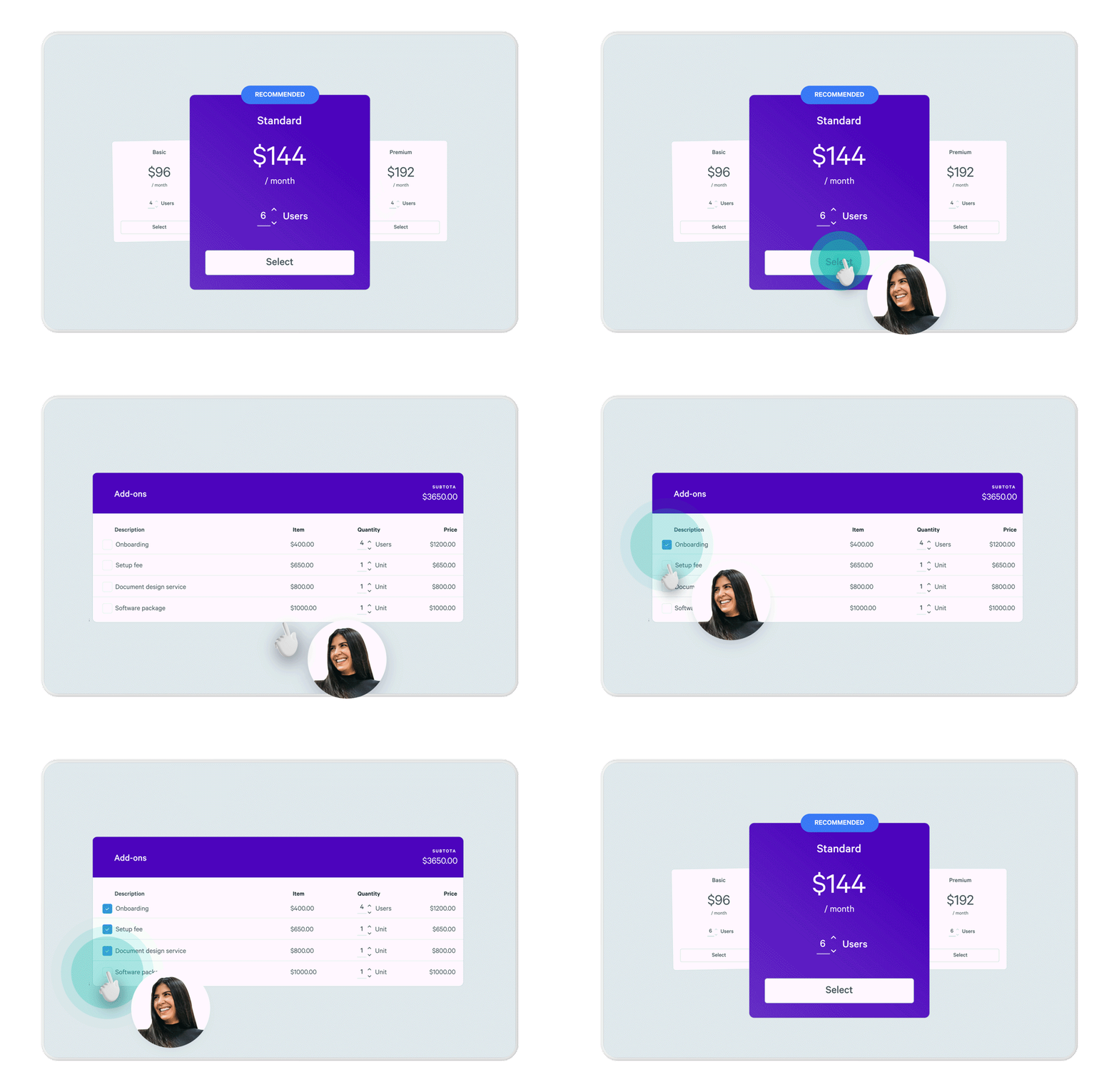
Qwilr's interactive pricing tables let clients explore different service tiers or role volumes directly within the proposal.
Clients can then review and select the arrangement that fits their budget without requiring a separate commercial conversation.
Acceptance and signatures
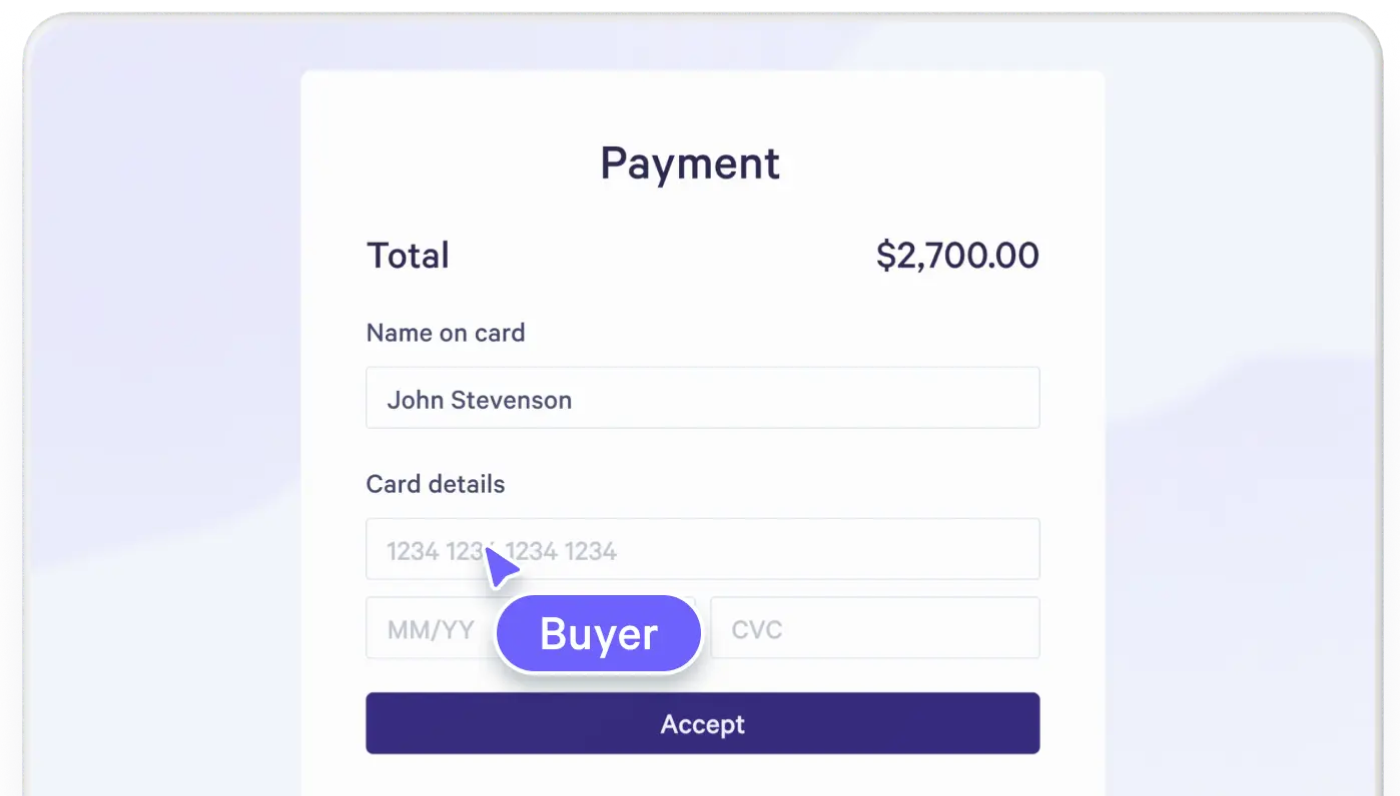
Formalizing the engagement doesn't need to involve a separate contract, a procurement handoff, or a week of back-and-forth. The acceptance section sets out what the client needs to do to formally engage the agency, the timeline for accepting the terms, and any conditions that apply before the search begins.
A clear acceptance process reduces the back-and-forth that typically follows a proposal submission. Rather than a hiring manager forwarding the document to procurement and waiting for a separate contract to be drafted, the proposal itself becomes the instrument of agreement.
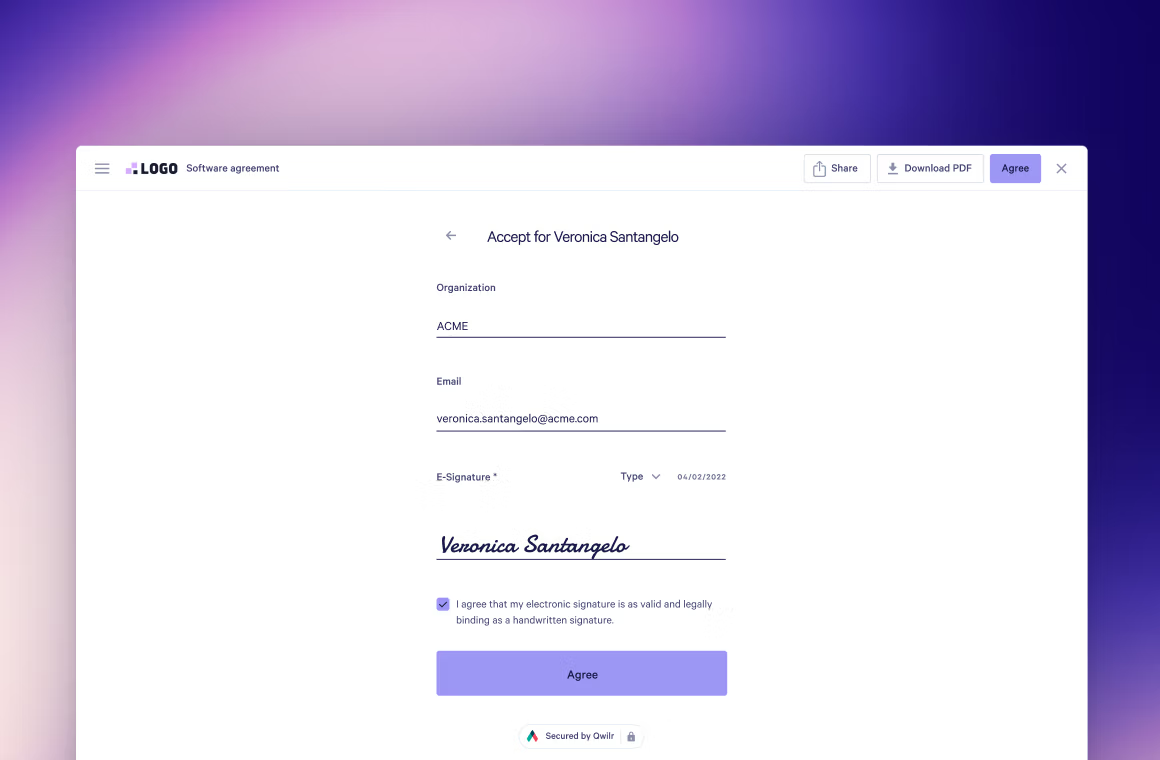
Qwilr allows agencies to collect legally binding e-signatures directly within the proposal.
The client signs on the same document they reviewed, which shortens the time between proposal acceptance and search commencement.
Case studies and testimonials
Clients evaluating recruitment agencies are making a decision under pressure. Case studies and testimonials give them evidence that the agency has solved a comparable hiring challenge before and what the outcome looked like.
A case study carries the most weight when it follows a clear before-and-after structure. The client's situation at the start of the search, the obstacles the agency navigated, and the outcome of the placement.
A vague success story adds little. A case study that describes a 45-day search for a hard-to-fill operations role in a competitive market, and the retention rate of that placement 12 months later, gives a prospective client something concrete to evaluate.
Testimonials work with case studies to add a human dimension to the agency's track record. A hiring manager describing the experience of working with the agency — the communication, the quality of the shortlist, the support through offer and counter-offer — addresses concerns that a case study alone won't cover.
Top tips for creating a recruitment proposal
Writing a recruitment proposal starts with understanding the client's hiring challenge well enough to address it specifically. Done well, it walks a hiring manager through the agency's thinking — the research behind the shortlist criteria, the screening process, the timeline, and the commercial terms. A clear structure helps clients compare agencies on substance and make a faster, more confident decision.
Meet with the client and document their hiring context
A discovery meeting with the client is the starting point for any recruitment proposal worth submitting.
Job descriptions outline requirements, but they sometimes fail to explain why the role is open, what previous searches missed, or what the hiring manager is under pressure to deliver. A structured briefing conversation surfaces that context.
The notes from that meeting shape every section of the proposal, including the candidate profile, the sourcing approach, the timeline, and the way the agency frames its understanding of the client's business. A proposal built on thorough discovery can speak to specifics:
- The team gap the hire needs to fill
- The internal deadline driving urgency
- The cultural fit criteria that ruled out the last shortlist
Role requirements alone don't tell an agency where previous searches broke down or what constraints are shaping the hire. The questions below draw out that fuller picture.
Research the market and talent landscape
Market research gives a recruitment proposal its credibility. When an agency can tell a client how many qualified candidates are actively looking in their region, what competing employers are offering, and where salary expectations have shifted, the proposal reflects genuine preparation for that search.
The research doesn't need to be exhaustive, but it does need to be specific to the role and location. A generic observation about talent shortages adds nothing. Data on the available candidate pool for a senior finance hire in a mid-sized city, or the average time-to-fill for a niche technical role in a competitive market, gives the client something concrete to weigh.
Relevant areas to research before writing the proposal include:
- Candidate availability and active vs. passive talent ratios in the target market
- Salary benchmarks and compensation trends for the role and seniority level
- Time-to-fill averages for comparable roles in the same industry
- Competitor hiring activity that may affect candidate supply or expectations
Build a tailored recruitment strategy
The recruitment strategy section tells the client exactly how the agency plans to find, assess, and deliver candidates for this role. Build it around what the discovery meeting revealed, like the timeline pressure, the screening criteria that ruled out previous shortlists, and the sourcing channels most likely to reach the right candidate profile.
A strategy written around a client's constraints gives decision-makers a basis for evaluation. One built on a standard process template gives them nothing to differentiate on.
The section should address each stage of the search:
| Stage | What to cover |
|---|---|
| Sourcing | Active job boards, passive outreach channels, referral networks, and talent pools specific to the role |
| Screening | Assessment criteria tied to the role requirements and cultural fit markers identified in the briefing |
| Candidate experience | How candidates will be communicated with and managed throughout the process |
| Shortlisting | How candidates will be evaluated, ranked, and presented to the client |
Structure and write the proposal
A well-structured recruitment proposal follows a logical sequence: company and role context, market research, recruitment strategy, timeline, team credentials, and commercial terms. Each section builds on the last and gives the client a complete picture of how the agency approaches the search.
The writing itself should mirror the language the client used in the discovery meeting. If the hiring manager described the role as "critical to scaling the sales function," that framing belongs in the proposal. It signals that the agency was listening, and it makes the document feel built for that client specifically.
A clear proposal structure also makes the proposal easier to review across a buying committee, where not everyone attended the briefing.
Each section should:
- Open with the client's hiring challenge or organizational context before describing the agency's approach
- Use the role title, team structure, and language the hiring manager used in the briefing
- Keep each section focused on one question the client needs to answer before moving forward, whether that's fit, process, timeline, or cost
- Avoid recruitment industry shorthand — terms like longlisting, Boolean search, or ATS workflow mean little to a hiring manager focused on filling a role
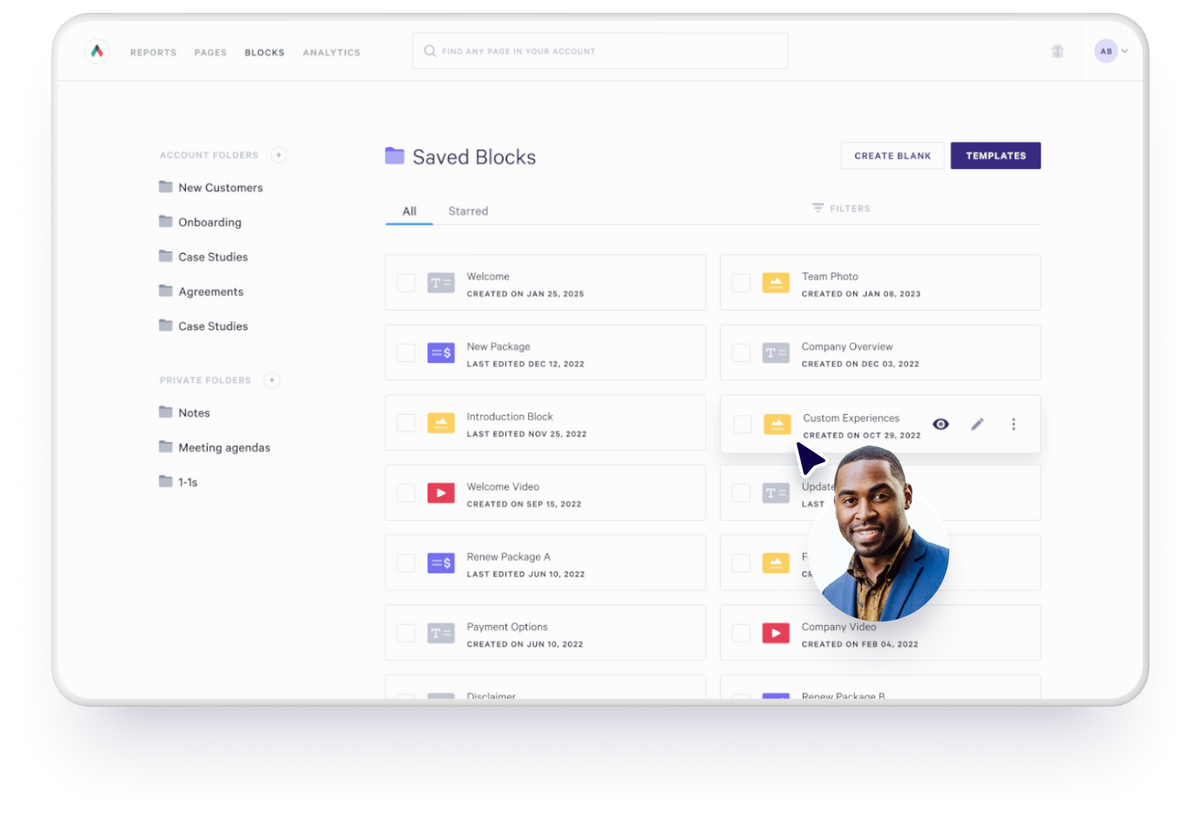
Proposal software like Qwilr allows agencies to build proposals using modular content blocks — pre-written sections for methodology, credentials, and pricing that can be customized per client without rebuilding the document from scratch.
Add visual components
A recruitment proposal rarely gets reviewed by just the hiring manager. 73% of purchases involve three or more departments, with an average of 13 people inside the buyer's organization involved in making a purchase decision. Each person who opens it brings a different level of context and a different set of questions.
A document that presents information clearly, with well-organized sections, visual hierarchy, and supporting media, gives every reviewer what they need without requiring the hiring manager to walk them through it.
Stephen Long, a recruitment sales trainer who has spent 30 years researching sales and influence and trained more than 50,000 recruitment consultants, argues that the facts and process details in a proposal serve a purpose beyond convincing the person who received it.
"When you're selling in a business-to-business situation, people have to sell something different to their colleagues. Even if they're the chief exec of the business, they have to sell it to HR, the line managers, whoever. If they're a line manager, they've got to sell it to HR, their boss, their colleagues. Everybody has to communicate and convince people internally — and that's what the facts do."
Visual components worth including:
- A short video introduction from the lead consultant, giving decision-makers a sense of who they'd be working with before a formal meeting
- A calendar link embedded directly in the proposal, reducing the back-and-forth involved in booking a follow-up call
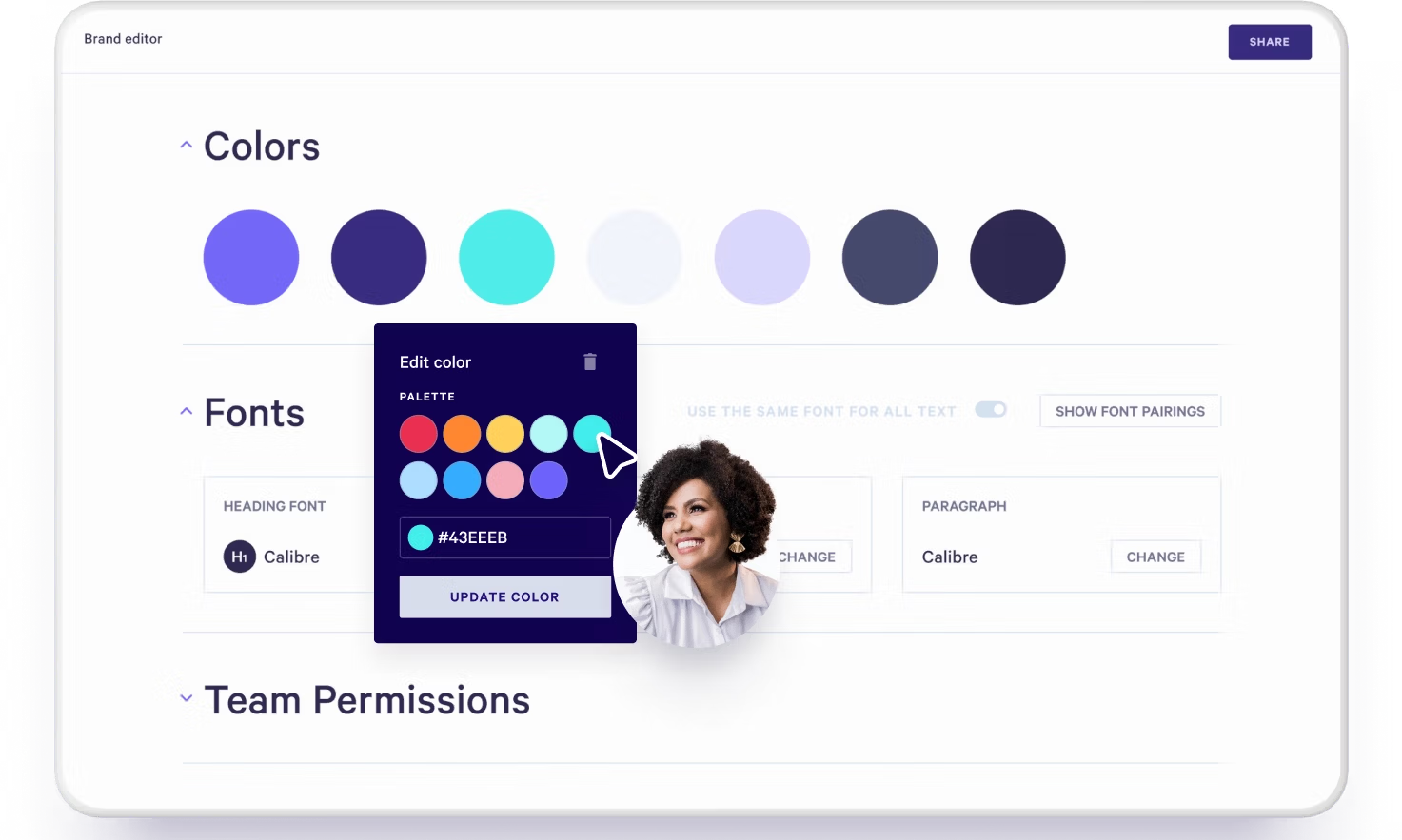
- Brand-consistent formatting — fonts, colors, and layout — that reflects the agency's professionalism throughout
Qwilr's proposal builder supports all of these elements within a single document. Agencies can set brand colors and fonts once and apply them across every proposal and keep the visual presentation consistent without manual formatting work on each new submission.
Use a free recruitment proposal template to streamline the process
Building a recruitment proposal from scratch for every new client brief is time-consuming and inconsistent. A template gives agencies a repeatable structure since the sections are already in place, the formatting is set, and the effort shifts to customization to reduce proposal creation time.
A strong recruitment proposal template includes placeholder sections for:
- Client context and hiring brief summary
- Market research findings
- Sourcing and screening methodology
- Timeline and delivery milestones
- Team credentials and consultant profiles
- Case studies and testimonials
- Commercial terms and fee structure
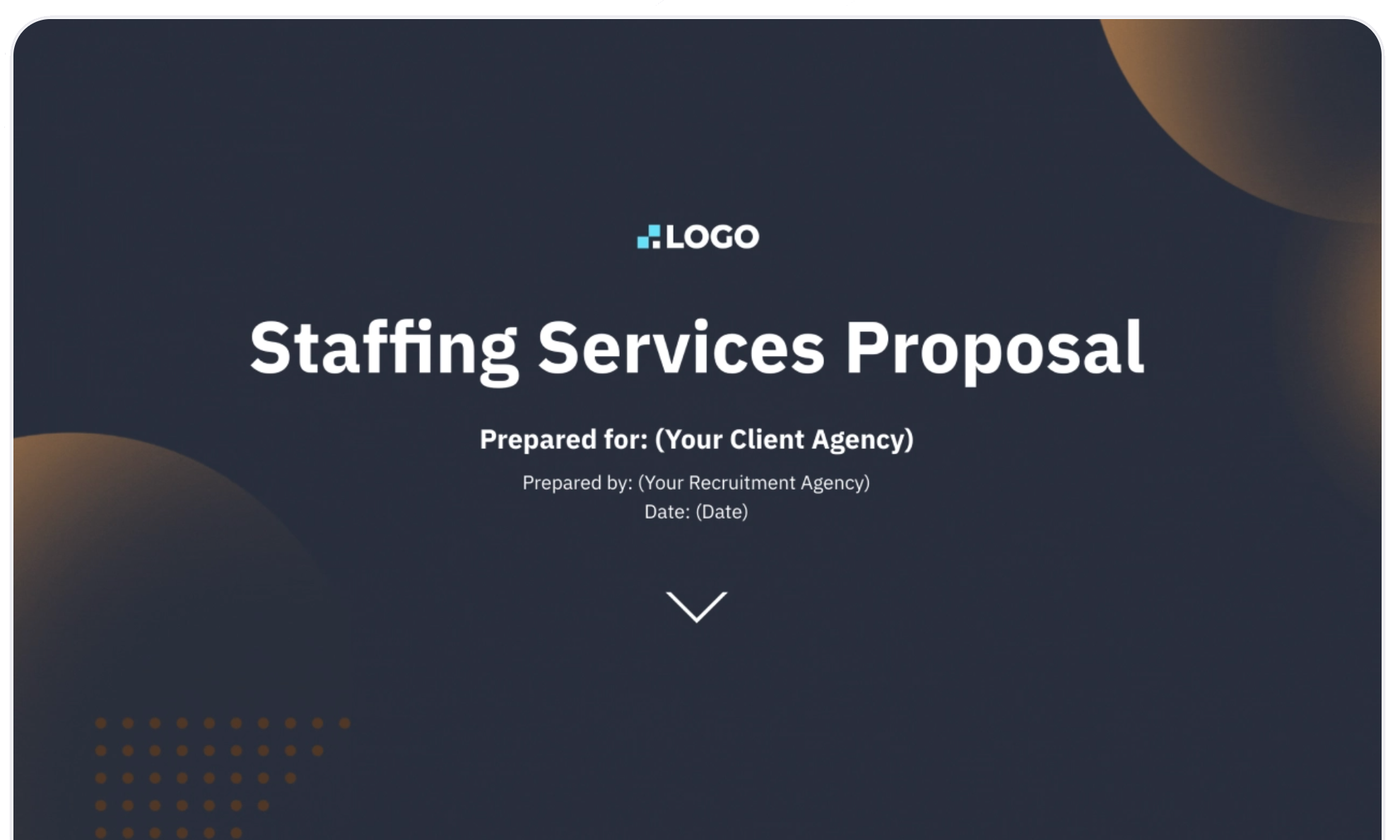
Qwilr's recruitment proposal template gives agencies a professionally designed starting point that covers each of these sections.
Agencies handling several active client briefs at once benefit from a structured proposal management process — one where the document framework is fixed and the time spent on each proposal goes toward client-specific content.
Recruitment proposal best practices
A recruitment proposal can be technically complete and still lose the mandate. The difference often comes down to how the proposal is sent, how it reads for someone with no prior context, and how the agency follows up after submission. Each of those decisions sits outside the document itself but directly affects whether it gets accepted. The best practices below cover each one.
Set a proposal expiry date to create a natural decision deadline
A recruitment proposal without an expiry date gives a client no reason to make a decision on any particular timeline. Setting a validity window — typically 14 to 30 days — creates a natural point at which the agency can revisit the terms, adjust for market changes, or close out an opportunity that isn't progressing.
For recruitment specifically, the expiry date reflects real constraints, such as shifts in candidate availability and changes in salary benchmarks.
A proposal based on market research conducted six weeks ago may no longer reflect the conditions the agency would be sourcing in. The expiry date makes that reality explicit without requiring a separate conversation.
Follow up using proposal engagement data
Proposal engagement data gives a follow-up call a particular starting point. Qwilr's analytics show when a client opened the proposal, which sections they spent the most time on, and whether the document was forwarded to additional stakeholders.

A hiring manager who spent significant time on pricing but moved quickly past the timeline section likely has budget questions, not process questions. That information shapes what the follow-up call addresses before the client has to raise it themselves.
Whether the proposal has been shared internally is equally useful data. Qwilr data shows proposals viewed by multiple stakeholders within the first five days are 1.9 times more likely to be accepted.
Nicole Hart, Marketing Manager at Fuse Recruitment, describes how her team acts on that data directly.
"If I see a page hasn't been opened yet, I reach out to the rep that sent it and have them follow up with the prospect."
Ask for feedback when a proposal is declined to improve future submissions
When a client chooses another agency, the reason is rarely volunteered. A direct request for feedback after a declined proposal gives agencies information on where the proposal fell short from the client's perspective.
The question doesn't need to be extensive. Asking what the selected agency offered that felt more aligned with the client's needs, or whether there was a specific section of the proposal that raised concerns, surfaces patterns over time. For example, an agency that consistently loses mandates at the pricing section has a different problem than one losing them at the strategy or credentials stage. That distinction only becomes visible when feedback is actively sought.
Build a recruitment proposal process with Qwilr
Recruitment is a relationship business, but the proposal is often the first test of whether an agency can be trusted with a high-stakes hire. A document that reflects genuine preparation, clear process, and genuine market knowledge gives a client the confidence to stop the search for an agency and start the search for a candidate.
Qwilr's recruitment proposal template gives agencies the foundation to deliver that consistently. Start a free 14-day trial and build your first proposal in Qwilr.

About the author

Kiran Shahid|Content Marketing Strategist
Kiran is a content marketing strategist with over nine years of experience creating research-driven content for B2B SaaS companies like HubSpot, Sprout Social, and Zapier. Her expertise in SEO, in-depth research, and data analysis allow her to create thought leadership for topics like AI, sales, productivity, content marketing, and ecommerce. When not writing, you can find her trying new foods and booking her next travel adventure."